
Choosing the right Comfortable Footwear For Women supplier in China requires more than comparing prices. It requires practical evidence.
A reliable supplier should understand women’s changing foot shapes, daily movement, and long-hour comfort. Factory experience matters. So does material knowledge. Soft leather, breathable mesh, flexible rubber, and supportive foam can change how a shoe feels by evening.
Podiatrist Dr. Jacqueline Sutera has said, “A shoe should fit the shape of your foot, not force your foot into its shape.” This principle should guide supplier evaluation. Buyers should request fitting samples, outsole tests, wear trials, and clear material specifications. A polished catalog is not enough.
Look closely.
This title explores China’s leading suppliers of Comfortable Footwear For Women and the standards separating dependable partners from risky choices. It considers factory capabilities, private-label services, quality control, production capacity, and export experience. It also examines how suppliers respond to feedback, because comfort cannot be judged from photographs alone.
A sample may feel excellent for ten minutes, then create pressure after a full workday. That weakness is easy to miss. Even established factories may deliver inconsistent sizing between production batches. Therefore, buyers should verify measurements, inspect stitching, test adhesives, and review customer returns.
No supplier is perfect. That is the uncomfortable truth. However, transparent communication and documented testing can reduce costly surprises. The strongest manufacturers combine efficient production with careful fit development, helping brands create footwear women can genuinely wear, not merely admire.
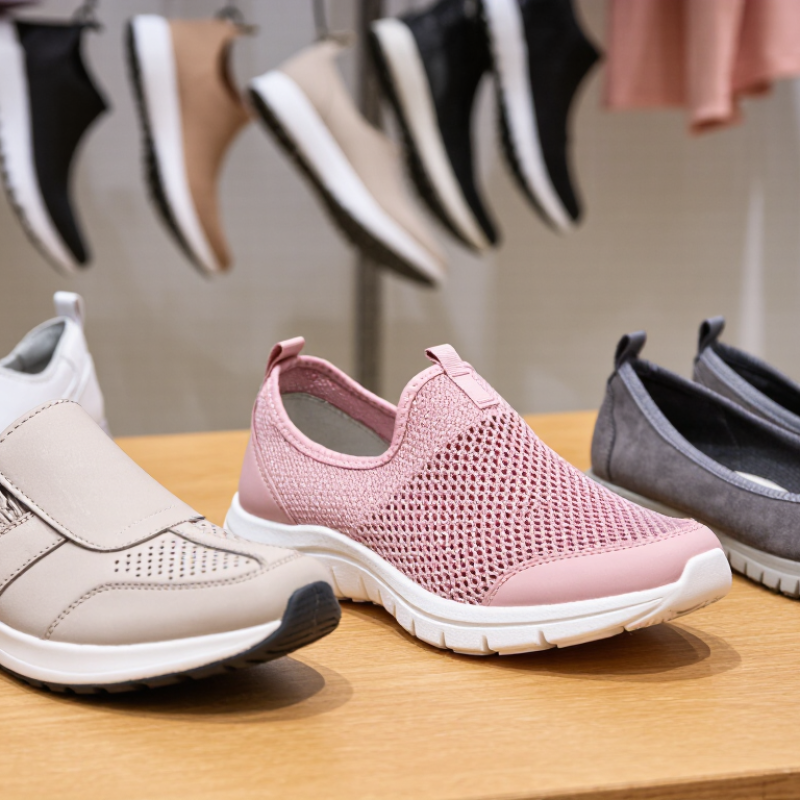
China’s women’s comfortable footwear supplier market is broad, but comfort depends on measurable details. Experienced buyers usually examine construction, materials, factory capability, and communication together. A soft insole alone does not guarantee all-day wear.
Reliable suppliers often provide sample pairs before bulk production. Check the heel grip, toe room, outsole flexibility, and stitching around the upper. Walk in each sample on tile and concrete. Notice pressure under the forefoot after several hours. Small defects become painful when repeated across thousands of pairs.
Material transparency matters. Ask for upper composition, lining details, adhesive information, and basic test reports. Factories with consistent quality systems can explain inspection points clearly. They should also discuss minimum order quantities, size grading, packaging, and production timelines without vague promises. A video tour may help, but an independent factory audit offers stronger evidence.
Price comparisons require caution. A lower quote may exclude testing, improved cushioning, or stronger cartons. Compare the full specification instead of the unit price alone. Many buyers overlook how sizing differs between markets. That mistake can create costly returns.
No evaluation is perfect. Even a trusted supplier may struggle during a new production run. Keep approved samples, written measurements, and inspection standards on record. Regular communication reduces surprises, although it cannot replace physical quality checks.
When evaluating China’s top comfortable footwear suppliers for women, begin with construction, not appearance. The 2024 World Footwear Yearbook reported that China produced about 55% of global footwear in 2023. That scale offers strong manufacturing choices, but quality can differ sharply between factories.
Fit comes first. A useful women’s shoe should offer enough toe-room, a stable heel counter, and flexible forefoot movement. The American Podiatric Medical Association reported that 77% of women had experienced foot pain in its consumer survey. Cushioning matters, but excessive softness may reduce stability. Not decoration. A breathable mesh upper can reduce heat during long walking hours. Removable insoles also help users manage different arch needs. Suppliers should provide measurements for heel height, forefoot width, insole hardness, and outsole slip resistance. Ask for physical samples.
Durability reveals more than a showroom promise. Check stitching density, bonding strength, bending tests, and colorfastness after repeated wear. Lightweight materials may improve comfort, yet they can wear faster near the toe crease. I would question any supplier offering “all-day comfort” without test records. Comfort is personal, too. A fit model with narrow feet may miss problems for wider customers. Reliable suppliers should document material sources, inspection procedures, and corrective actions. Small details count.
China’s comfortable footwear suppliers usually fall into several practical categories. OEM factories produce designs from buyer specifications, while ODM suppliers offer ready-developed soles, uppers, and fitting structures. Specialized comfort footwear manufacturers focus on arch support, cushioning, flexible materials, and wider toe boxes. Some factories also serve healthcare, walking, and workwear markets, where durability matters as much as softness.
Guangdong and Fujian remain important regions for sports, casual, and lightweight footwear production. Zhejiang is known for flexible manufacturing networks and varied material sourcing.
Jiangsu supports mid-to-high volume production, often with stronger process controls. Shandong can suit buyers seeking cost-conscious production and practical construction. Regional strengths overlap, however. No area is perfect.
A reliable supplier review should examine more than showroom samples.
Ask for material specifications, sole compression data, size grading records, and production photographs. Request samples after repeated walking tests, not only after visual inspection. A soft insole may feel impressive for ten minutes, then flatten quickly.
Factory audits should cover worker safety, quality systems, and traceability. Production capacity also needs verification through machinery, staffing, and recent order records. Small trial orders reduce avoidable risk.
Communication still matters. A technically capable factory may misunderstand comfort expectations without clear measurement charts and wear-test feedback.
Even experienced buyers can overlook seasonal capacity changes or inconsistent foam density. Careful verification remains necessary.
What Are China Top Comfortable Footwear For Women Suppliers?
Choosing a comfortable footwear supplier requires more than comparing catalog photos. During supplier reviews, I examine sample pairs under real conditions. I check stitching, heel balance, sole flexibility, and insole support. The upper should feel smooth, without sharp edges or strong chemical odors. Ask for material specifications and production quality records. A factory should explain how it controls sizing, bonding, and final inspection. One sample is not enough. Comfort can change between batches.
Pricing needs a complete calculation. Request quotes for different order quantities, materials, packaging, and shipping terms. A low unit price may hide mold fees, custom packaging costs, or expensive revisions. Compare the total landed cost instead. Also confirm payment stages and replacement policies for defective pairs. My own mistake was focusing too heavily on the quoted price. It caused delays when packaging details were excluded.
Tips: Request three sample sizes and test them after several hours of walking. Ask for a pre-shipment inspection with photos and measurements. Check whether the supplier can maintain the same color, sole hardness, and stitching quality across repeated orders. Reliability appears in small actions. Replies should be clear, records should be consistent, and promised dates should be realistic. A supplier that admits limitations may be safer than one making perfect promises.
Choosing the right Chinese comfortable footwear supplier requires more than comparing prices. Comfort depends on materials, construction, and consistent quality control. Ask suppliers about breathable mesh, soft lining, flexible midsoles, and removable insoles. Request detailed size charts for your target market. A shoe can look attractive but still cause pressure around the toes.
I recommend starting with samples before discussing large orders. Wear each pair for several hours on different surfaces. Check heel stability, stitching, odor, glue marks, and outsole grip. Ask for factory photos, production records, material test reports, and relevant compliance documents. Reliable suppliers should explain their minimum order quantity, sample fees, production schedule, packaging options, and defect policy clearly. Video inspections can help, but they cannot replace independent quality checks.
Tips: Prepare a written product specification. Include measurements, colors, materials, logo placement, carton details, and acceptable defect limits. Compare at least three suppliers. Contact their references when possible. Confirm payment terms and delivery responsibilities in a signed agreement. I once underestimated fitting differences between regions, which caused avoidable revisions. That experience taught me to test several foot shapes before approving production. Some suppliers communicate quickly but provide vague answers. Treat that as a warning, not a minor inconvenience. Record every change by email, because memory is unreliable during busy production periods.
A practical supplier-screening benchmark based on measurable footwear sourcing criteria.
Comfort testing and material safety receive the highest evaluation weights because fit, cushioning, flexibility, breathability, and chemical compliance directly affect customer satisfaction and import readiness. Buyers should verify these areas through samples, test reports, factory audits, and production records rather than relying only on supplier claims.
Examine construction, materials, factory capability, and communication together. A soft insole alone proves little. Check stitching, heel grip, toe room, and outsole flexibility.
Walk in each sample on tile and concrete. Test for several hours. Notice forefoot pressure, heel movement, and rubbing around the toes. Walk longer.
Ask for upper composition, lining details, adhesive information, and basic test reports. Request clear specifications, not vague descriptions. Strong odors deserve further investigation.
Compare total landed cost, not unit price alone. Include testing, packaging, mold fees, revisions, shipping, and payment stages. Low prices can hide missing details.
OEM factories follow buyer specifications. ODM suppliers offer existing soles, uppers, and fitting structures. Specialized factories may focus on cushioning, arch support, flexible materials, or wider toe boxes.
No region guarantees quality. Different areas may support sports, casual, flexible, or higher-volume production. Verify machinery, staff, recent orders, and inspection records directly.
Request size grading records, sole compression data, production photographs, and inspection standards. An independent factory audit provides stronger evidence than a video tour. Not always perfect.
Start with a small trial order. Keep approved samples, written measurements, and inspection requirements. Request pre-shipment photos and measurements. One sample is not enough.
Reliable replies are clear, consistent, and realistic. The supplier should discuss quantities, packaging, timelines, and defects openly. A supplier admitting limitations may be safer than one promising everything. My price-focused mistake caused delays.
China has become a major sourcing destination for Comfortable Footwear For Women, offering a wide range of manufacturers, flexible production capabilities, and competitive pricing. Suppliers are commonly concentrated in established footwear manufacturing regions, where factories specialize in casual shoes, walking footwear, sandals, slippers, and other comfort-focused styles. Key product features often include ergonomic footbeds, supportive cushioning, breathable materials, lightweight construction, durable outsoles, and practical designs suitable for everyday use.
When evaluating a Chinese footwear supplier, buyers should consider material quality, production capacity, product consistency, customization options, pricing transparency, minimum order quantities, and delivery performance. It is also important to review samples, verify quality-control procedures, communicate specifications clearly, and assess the supplier’s responsiveness and reliability. By comparing supplier categories and manufacturing strengths carefully, businesses can select a suitable partner that balances comfort, quality, cost, and long-term supply stability.
