
Buying Suede Shoes Women's wholesale requires more than choosing attractive colors and competitive prices. Suede can feel soft, warm, and luxurious, yet it also reveals poor finishing quickly. Uneven nap, weak stitching, or thin lining may become visible under store lighting. Small details matter.
Footwear designer Christian Louboutin once said, “A shoe has so much more to offer than just to walk.” His observation suits wholesale buying. Retailers are not purchasing products alone. They are selecting comfort, presentation, durability, and customer confidence. This guide introduces seven practical tips for evaluating Suede Shoes Women's collections before placing a large order.
The advice covers suede grading, supplier verification, sizing consistency, construction, seasonal colors, packaging, and landed cost. Request physical samples before trusting photographs. Rub the upper gently and inspect whether the nap changes evenly. Check the heel attachment, outsole flexibility, seams, and inner cushioning. Ask suppliers how materials are sourced and how products are stored during shipping.
Not every attractive pair deserves shelf space. That is the uncomfortable part.
A low price may hide inconsistent sizing or costly returns. A premium quote may still lack reliable quality control. Compare samples against clear standards, record defects, and question assumptions. Wholesale success is rarely based on one impressive style. It depends on repeatable quality across dozens or hundreds of pairs. These seven tips will help buyers make more careful, evidence-based decisions while building a commercially useful Suede Shoes Women's assortment.
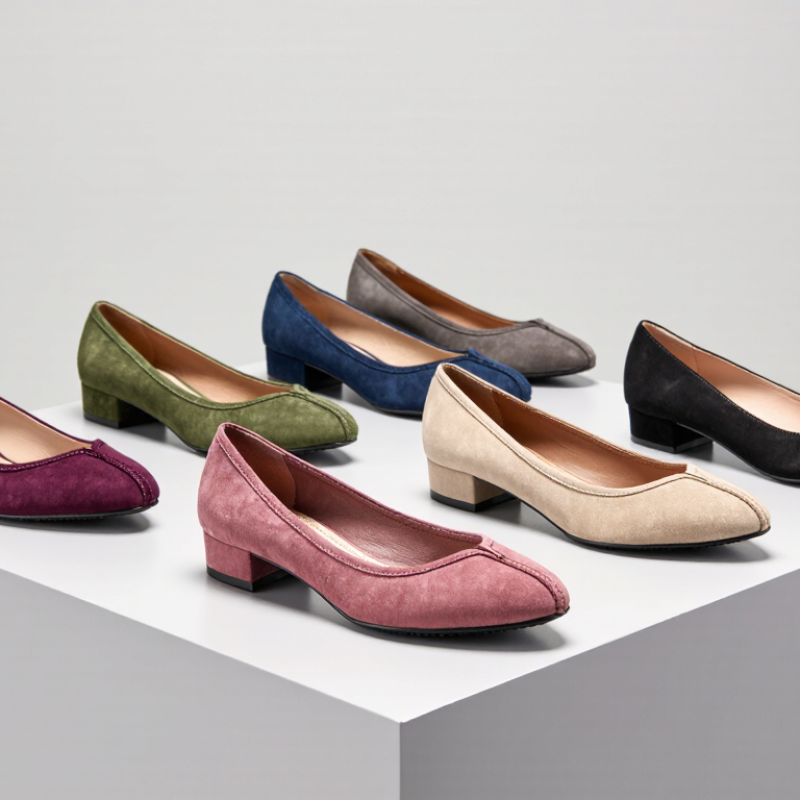
Define the buyer before choosing colors. A boutique serving office commuters needs low heels, neutral shades, and reliable size runs. A trend-led online seller may need statement colors and quick replenishment. The World Footwear Yearbook 2024 estimates that global footwear production reached 23.9 billion pairs in 2023, with Asia accounting for most output. This scale offers sourcing options, but it does not prove demand for women’s suede styles in your market. Grand View Research valued the broader global footwear market at USD 鞋438.6 billion in 2023; treat that figure as context, not a suede forecast.
Write a product brief with measurable details: real suede or clearly identified alternatives, upper thickness, lining, sole material, heel height, color tolerance, and size range. Ask for a size-run sample and inspect the nap under daylight. Check whether the surface marks easily and whether paired shoes match in shade. Fit varies. A single sample may not reveal sizing problems across a full run, so test several sizes where possible.
Set order quantities around your sales history, storage capacity, and reorder window. Request the minimum order quantity by color, production lead time, packaging details, and written quality tolerances before confirming a purchase. Ask suppliers to identify material composition and provide relevant sourcing documentation. Details matter. I have seen attractive samples become awkward stock when one shade required an impractical minimum. Leave room for that mistake in your first order.
Touch the suede for softness and consistent nap. Check for bald patches, shiny streaks, and loose fibers. Brush it under natural light. Compare the color in several directions. It may change slightly.
Request the same suede lot whenever possible. Ask for written material specifications and test results. A beautiful sample may hide batch variation. That is an uncomfortable possibility.
Check seam spacing, lining edges, heel attachment, and adhesive marks. Flex the shoe gently. Look for toe puckering or loose stitching. Compare both shoes carefully.
Review a complete size run, not one sample. Measure footbed length and width. Confirm grading between sizes. Ask for written measurements. Size charts can miss real fit problems.
Consider flats, low heels, and seasonal designs. Different buyers need different levels of comfort. Check toe shapes and heel heights. An attractive range can still have gaps.
Ask which colors, linings, heel heights, and packaging can change. Confirm the effect on minimum quantities and lead time. Request a revised sample when fit changes. Small details matter.
Look for clear replies, consistent specifications, and realistic delivery dates. Ask how defects are recorded and handled. Fast communication is not proof of quality. I would remain cautious.
Request a pre-shipment inspection plan. Keep approved samples, measurements, and written terms together. Compare them with the delivered shoes. Check color, stitching, lining, soles, and packaging. Some differences may still appear.
Buying women’s suede shoes wholesale starts with a clear understanding of your target customers, price range, and the styles they are most likely to wear. Decide which colors, sizes, and designs suit your market, then assess suede texture, material consistency, stitching, sole construction, and fit. A balanced selection of classic and seasonal options can help you meet different customer preferences. When comparing suppliers, look beyond the unit price: review minimum order quantities, volume discounts, payment terms, and the full cost of sourcing.
Before placing a large order, request samples to check quality and sizing, and confirm whether customization is available. Evaluate each supplier’s communication, production capacity, and consistency so you can make a reliable long-term choice. Plan shipping timelines, storage, inventory levels, and return procedures in advance, while accounting for seasonal demand and possible delays. With thoughtful preparation, Suede Shoes Women's can become a practical addition to your wholesale assortment and support a smoother buying process.
