
Finding Large Size Women’s Shoes in 2026 takes more than locating a bigger number on a size chart. Width, toe shape, arch support, and the shoe’s actual interior length all affect fit. A size 11 in one brand may feel tight across the forefoot, while another pair leaves useful room at the toes. Check the retailer’s measurements, return terms, and recent fit reviews before ordering. If possible, measure both feet while standing, later in the day, and compare the larger foot with the brand’s chart.
Podiatrist Dr. Miguel Cunha is a useful expert reference for foot health and shoe fit. A practical fit-first principle, consistent with podiatric guidance, is simple: choose shoes that accommodate your feet rather than expecting your feet to adapt to the shoes. That distinction matters when shopping online, where polished product photos cannot show pressure across the little toe or slipping at the heel. Look for clear width options, adjustable closures, and materials that feel supportive—not merely soft. Comfort should be noticeable during a short indoor try-on.
This guide explores ways to compare brands, read size charts, and spot design details that often matter in extended sizes. It also recognizes an imperfect reality: availability can be limited, and “wide” does not mean the same thing everywhere. Keep notes on brands and measurements that work for you. Small details matter. A reliable fit is personal, and one pair’s success does not guarantee the next will fit the same way.
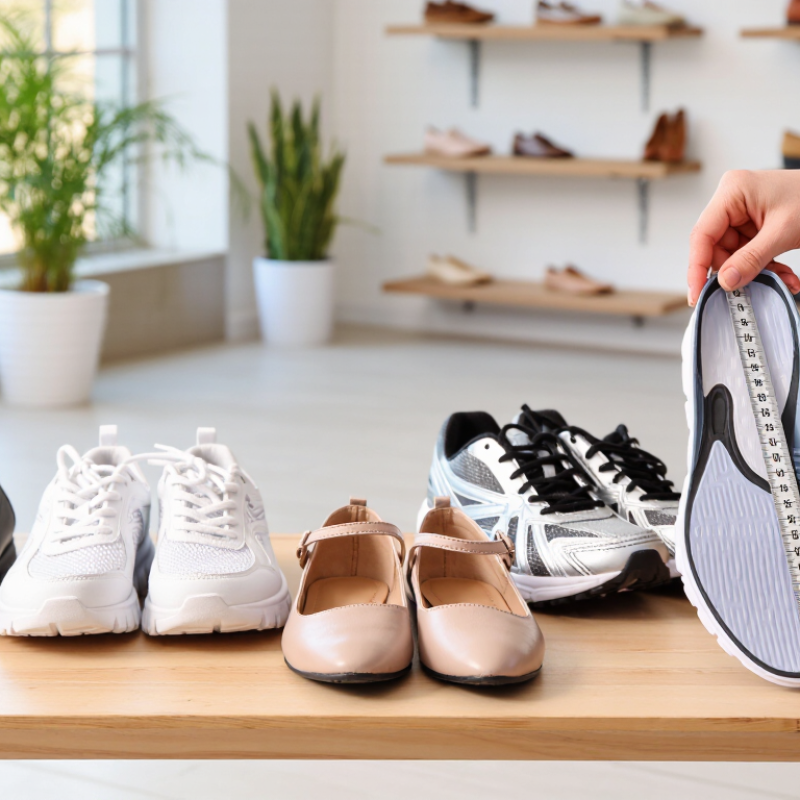
Large-size women’s shoes in 2026 are easier to compare when size and width are treated as separate measurements. Extended-length options may come in standard, wide, or extra-wide fits, but labels are not consistent across makers. A size number alone tells only part of the story. Fit is personal.
Measure both feet near the end of the day, when they may be slightly larger. Stand on paper, trace each foot, and note the longest toe and widest point. Use the larger measurement when checking a size chart, then review the width options and return terms. A roomy toe box can reduce pressure, while a firm heel counter may help prevent slipping. Small details matter.
Materials and construction also affect comfort. Soft leather or flexible knit may give a little, but they cannot reliably fix a shoe that is too short or narrow. For work shoes, check whether the sole bends near the ball of your foot; for daily walking, consider cushioning and grip. Try shoes with your usual socks, and walk on a clean indoor floor. Even careful measuring can miss a high instep or a bunion area, so recheck for pressure after several minutes. I would not assume “wide” means generous everywhere. Fit labels still leave room for guesswork.
Finding large size women’s shoes in 2026 starts with measurements, not a guess based on your usual size. Feet can change over time, and one foot may be longer or wider than the other. Measure in the late afternoon, when feet may be slightly larger, while wearing the socks you plan to use with the shoes. Small details matter.
Place a sheet of paper on a hard floor and stand on it with your weight evenly balanced. Mark the back of your heel and the tip of your longest toe, then measure the distance between the marks. Measure both feet. Use the longer measurement when comparing your results with a shoe size chart. For width, measure around the broadest part of each foot; a narrow-looking outline can still feel tight across the forefoot. I once relied on a measurement taken while sitting, and the shoes felt cramped when I stood. It was a small mistake, but an easy one to repeat.
Check the sizing information for the specific shoe, since labels and fits can differ. Leave a little room in front of your longest toe, but avoid a heel that slips with each step. If possible, try shoes on both feet and walk on a firm surface. Your toes should spread comfortably. Recheck the fit with orthotic inserts or thicker socks, if you use them; I still find this step easy to overlook.
How to Find Large Size Women's Shoes in 2026?
Comparing Size Charts Across Brands and Regions
Large-size women's shoes are easier to compare when you treat each size chart as a separate system, not a direct translation. US, UK, and EU sizes can differ by more than one number, and conversions are not always consistent. Measure both feet late in the day, when they may be slightly larger. Stand on paper, mark your heel and longest toe, then measure in centimeters. Use the longer foot. Width matters, too. A chart that lists only length may miss pressure across the ball of your foot. Small detail, big difference.
Before ordering, check whether a chart gives foot length or the shoe's inside length; they are not interchangeable. Compare your measurement with the exact chart for that style, then read fit notes about width and toe shape. Regional conversions are useful starting points, not guarantees. If one foot measures 27.1 centimeters and falls near a size boundary, the larger option may give your toes more room, but could allow heel slip. I would not trust an old size label alone. Socks, insoles, and a pointed toe can change the fit. Online charts can still be unclear. That deserves a second look.
Finding a retailer that stocks extended sizes takes more than checking a size filter online. Look for stores that list specific lengths and widths, such as wide or extra-wide, rather than relying on a broad “extended” label. Two shoes marked the same size can fit differently across the toe box and instep. Check product pages for measurement charts, return policies, and notes about whether a style runs narrow. Call before you go. Ask which sizes are available in-store and which can only be ordered. Inventory listings can lag, so confirm before making a long drive.
Independent shoe shops, department stores, and specialty footwear retailers may carry different size ranges. Search websites with exact terms like “women’s size 12 wide,” then confirm availability by phone or chat. At a fitting, try both shoes later in the day, when feet may be slightly swollen. Walk on a firm surface and check that your heel stays secure without pressure on your toes. Bring the socks you usually wear. This advice is not perfect: online filters can miss useful options, and stock changes quickly. A brief call can save time, though it cannot guarantee a comfortable fit.
Shoe-size labels use different step sizes: US and UK full sizes advance by about one-third of an inch, while EU sizes advance by two-thirds of a centimeter. This chart compares those nominal increments—not retailer inventory or direct size conversions. When shopping for extended sizes, measure both feet, check each retailer’s size and width filters, and confirm the specific style’s size range and return policy.
Finding large-size women’s shoes in 2026 takes more than choosing the largest number on a size chart. Measure both feet late in the day, when they may be slightly larger, and use the longer measurement. Check the product’s exact size range and width options; “wide” and “extra-wide” are not interchangeable. Look for usable details, such as toe-box shape, heel hold, and whether the material stretches. A size label alone can mislead.
Return terms deserve equal attention. The National Retail Federation’s 2024 Consumer Returns in the Retail Industry report estimated that 16.9% of annual retail sales would be returned, totaling about $890 billion. That estimate covers retail overall, not shoes specifically, but it shows why clear return rules matter. Check the return window, who pays postage, and whether tried-on shoes qualify. Keep the packaging until the fit feels right. Small detail, big difference.
Availability can change by size and width, even when a style appears in stock. Confirm the selected options before checkout, and check whether the page shows warehouse stock or only a general availability message. If a fit guide gives foot length but not width, contact customer service or compare measurements with a pair that already fits. I used to trust size labels too much; honestly, they are only a starting point.
| What to Check | Useful Details | How to Use It |
|---|---|---|
| Size range | Check the actual size options listed for each style. Extended sizes are not stocked in every design or color. | Filter by size first, then confirm that your preferred color and width are available. |
| Foot length | Measure both feet from heel to the tip of the longest toe while standing. Feet can differ in length. | Use the longer foot and compare its measurement with the seller's size chart. Shoe-size conversions are approximate and can vary by maker. |
| Foot width | Width labels may include narrow, standard, wide, or extra-wide options; letter codes and naming conventions can differ. | Check the style's width choices and fit notes rather than assuming a longer size will solve a width issue. |
| Toe-box shape | A pointed or tapered toe may feel narrower than a round or square toe, even when the labeled size is the same. | Look for product measurements, fit notes, and reviews that mention toe pressure or room for toes. |
| Fit notes and materials | Descriptions may identify a style as true to size, snug, or roomy. Materials and construction can affect how a shoe feels. | Read notes for the exact style; do not rely only on fit comments for a different shoe in the same size. |
| Return window and condition | Return deadlines, eligible conditions, and exceptions are set by the seller and may differ for sale or special-order items. | Read the current policy before ordering and note the deadline, packaging requirements, and any exclusions. |
| Return costs | Return shipping fees, prepaid labels, and in-store return options vary by seller and order. | Check who pays for return shipping and whether exchanges follow the same rules as refunds. |
| Stock and delivery | Availability can differ by size, width, color, shipping location, and time. Online stock can change. | Confirm the selected size is in stock and review the estimated delivery date before checkout. |
| At-home fit check | Feet may swell during the day, so a shoe can feel different at different times. Indoor try-on rules depend on the return policy. | Try shoes on a clean indoor surface, with the socks or hosiery you plan to wear, and check the policy before removing tags or packaging. |
Note: Size charts, fit descriptions, inventory, and return terms vary by seller and style. Verify the current details on the product page before purchasing.
Measure in the late afternoon, when your feet may be slightly larger. Wear the socks you plan to use.
Stand on paper on a hard floor. Mark your heel and longest toe, then measure between them. Measure both feet.
Compare the longer foot with the shoe size chart. Feet can differ, even when the difference looks small.
Measure around the broadest part of each foot. Look for listed widths, such as wide or extra-wide, and check for forefoot pressure.
Try both shoes and walk on a firm surface. Your toes should spread comfortably, and your heel should stay secure.
Leave a little space beyond your longest toe. Too much room can make the heel slip with each step.
Check its size chart and call before making a long drive. Ask whether your size is in-store or available only by order.
Yes. Bring your usual socks and try any orthotic inserts you use. I still forget this sometimes.
Finding Large Size Women's Shoes in 2026 starts with understanding the range of extended-size options available, including differences in width, shape, and construction. Measure both feet while standing, preferably later in the day, and use the larger foot as your guide. Check the length and width carefully, since a comfortable fit depends on more than the number printed on a shoe.
Because sizing can vary between brands and regions, compare each retailer’s size chart rather than relying on a familiar size alone. Look for stores that clearly list extended sizes and show which options are currently in stock. Before ordering, review details such as toe-room, arch support, materials, and customer fit notes. Also confirm the return policy and expected availability so you can choose confidently and exchange a pair if the fit is not right.
